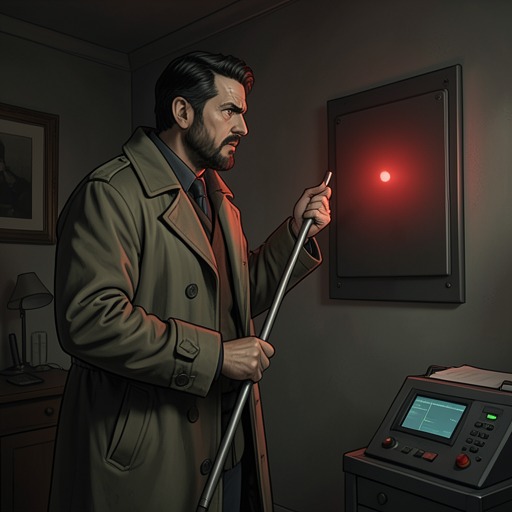
Committee for State Security of the Soviet Union
Voices from ChernobylThe Committee for State Security of the Soviet Union enters the book not through an institutional portrait but through the pressure it exerts on what people can say. A KGB man personally warns returning soldiers against speaking about what they witnessed; elsewhere, a scientist’s urgent attempts to report the danger are interrupted by blocked calls and official reassurances. These accounts present security not as a fully described organization, but as a force in a wider system of enforced silence, where access to evidence and permission to speak are themselves matters of power.
Direct warnings to witnesses
Before one group of soldiers returned home, they were called in to speak with a KGB man. He convincingly warned them that they should not tell anyone, anywhere, what they had seen. The account makes the encounter a concrete point of contact with the Committee: the demand for silence is delivered face to face, just before witnesses leave the site and re-enter ordinary life. The warning does not erase what they saw; it constrains the possibility of sharing it.
The same testimony sets this prohibition against the soldiers’ experience of danger. One man contrasts returning from Afghanistan, when he had felt certain he would live, with the prospect of returning from Chernobyl, where he believed death would come only after he got home. The security warning thus belongs to a larger pattern in which exposure and its consequences travel back with the witnesses, while public discussion of the experience is restricted. Another soldier recalls being made to sign a nondisclosure form and describes handling graphite from the reactor with ordinary shovels, changing masks repeatedly, and helping pour the sarcophagus. The account does not identify who imposed that form, so it cannot establish that the Committee itself administered every secrecy measure; it does show the environment of silence in which these men served.
Blocked communication and suspected surveillance
A scientist describes trying repeatedly to reach Nikolai Slyunkov, then First Secretary of the Central Committee of the Communist Party of Belarus, over a government line. According to his account, the connection failed as soon as he began discussing the accident. He took the interruption as evidence that someone was listening and called it a government within the government. The passage strongly evokes security surveillance, but it does not independently identify the listener as the Committee for State Security of the Soviet Union. The distinction matters: the text records the scientist’s inference, not a confirmed account of who controlled the line.
After eventually reaching Slyunkov, the scientist warned that a radioactive cloud was moving toward Belarus and urged immediate iodine prophylaxis and evacuation near the station. Slyunkov replied that he had already received reports of a fire and had been told it was extinguished. At a later meeting, he invoked assurances from Moscow and from a radiological authority, and objected that the scientist’s staff were alarming people with dosimeters. The scene places the scientist’s measurements and warnings against administrative reassurances; it does not show the Committee issuing those reassurances. Its relevance to the organization lies instead in the preceding interruption and the speaker’s sense that even an official line could not be used freely to convey urgent information.
Secrecy within a wider system
Other accounts broaden the setting without assigning every act of concealment to the Committee. A scientist and engineer recalls that supervisors told researchers to take measurements and watch television, while Mikhail Gorbachev publicly reassured people that immediate measures had been taken. The researchers compiled reports and explanatory notes, yet the speaker says they remained silent and followed orders because of Party discipline and their faith in the system. This testimony shows how restricted communication could be reinforced by institutional obedience and trust, not only by an explicit security warning.
A separate group of soldiers was told, before returning home, that it would be better in the interests of the State not to talk about what they had seen. The speaker says that, apart from the witnesses themselves, no one knew what had happened there. Since the account does not name the person or agency issuing that warning, it cannot be attributed specifically to the Committee. Read alongside the KGB man’s explicit intervention, however, it shows that secrecy was encountered through both identifiable security personnel and less clearly defined official instructions.
Consequences and limits of the record
For one young liquidator, silence persisted after demobilization. He describes waking at night while his mother asks why he lies awake without speaking; he cannot answer because no one can understand where he has returned from, and he cannot tell them. At work, when he invokes his status as a Chernobylite and says he protected others, his boss responds that the factory had not sent him there. The passage does not attribute the factory’s response to the Committee. It reveals a consequence of the larger silence: a witness can be forbidden to speak about his experience and then find that the experience carries little force in civilian life.
The evidence therefore supports a focused account of the Committee’s role. A KGB representative directly warned witnesses not to disclose what they had seen, while another account of blocked communications raises suspicion of surveillance without proving who was responsible. The Committee appears within a broader landscape of nondisclosure, Party discipline, official reassurance, and personal isolation; the book distinguishes these pressures rather than demonstrating that they all originated with one agency.